Study confirms: AI enables precise early detection of milk fever
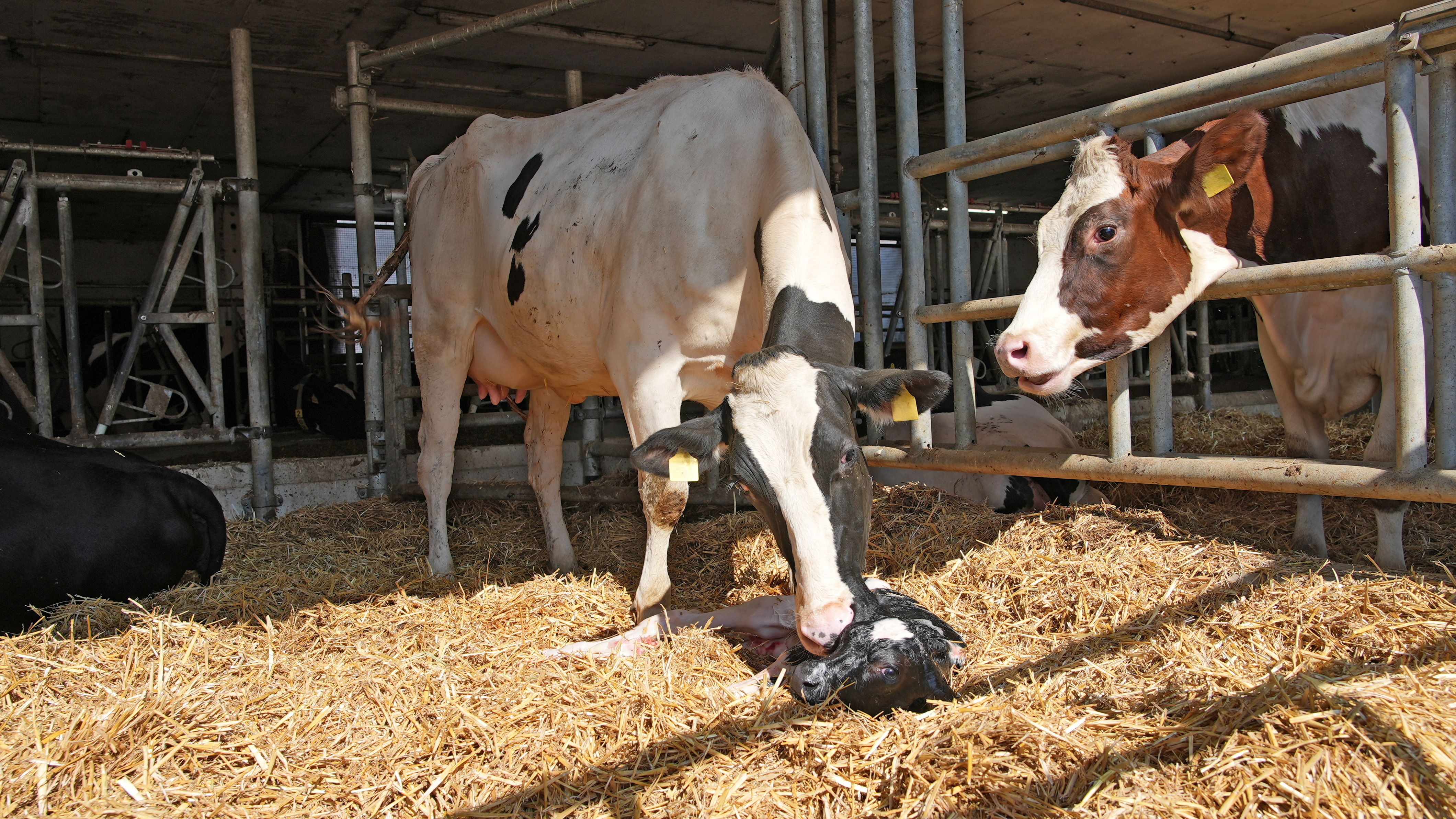
Milk fever is one of the most common and costly metabolic diseases in dairy farming. Around 5–10% of all dairy cows suffer from clinical milk fever with being down and having muscle weakness. But that's just the tip of the iceberg: More than half of all dairy cows develop subclinical milk fever around calving – often unnoticed, but with significant consequences for health and performance.
A recent study by the University of Veterinary Medicine Vienna in collaboration with smaXtec now shows: With smaXtec's AI-powered TruAdvice® technology, at-risk cows can be reliably identified – before clinical symptoms appear.
Why is milk fever so prevalent?
Of 76 calvings evaluated in the study, 39 animals (51%) developed subclinical milk fever and 6 animals (8%) showed severe calcium deficiency. The risk factors are well known:
- Higher lactation number: Not a single heifer developed clinical milk fever, but 5 out of 6 cows from the fourth lactation onwards had low calcium levels.
- High milk yield: A cow producing about 45 kg of milk per day requires an additional 56 g of calcium daily. In contrast, a non-lactating cow needs only about 21 g of calcium per day to maintain normal body functions.
Previous approaches to risk assessment – for example, based on laboratory values such as calcium, magnesium, or phosphorus – have only low to moderate predictive power. For farmers and veterinarians, however, it's crucial to know at the individual animal level: Which cow is at risk? And when do I need to act?
How the study was conducted
For the study, 69 animals (22 heifers and 47 cows) were monitored at the Raumberg-Gumpenstein research farm in Austria. Of the 89 recorded calvings, 76 calvings could be evaluated after excluding twin births, diseases, and preventive vitamin D3 administration. The calvings were monitored with the smaXtec bolus for a period of 60 days before and 60 days after.
Additionally, the animals were examined at 10 time points (from 21 days before to 14 days after calving). Blood samples were taken and calcium levels were determined. Based on the examinations, the animals were divided into three groups: healthy (calcium above 2.2 mmol/L), subclinical milk fever (calcium between 1.8 and 2.2 mmol/L), and low calcium level (below 1.8 mmol/L).
Changes in body temperature as an Important indicator
The internal body temperature showed clear changes. Cows with low calcium values had temperature drops more frequently: 66.7% of these cows showed corresponding temperature drops, compared to only 26.8% of healthy animals.
The deep learning model TruAdvice®
The AI model TruAdvice® from smaXtec uses data from 12 days before calving and combines multiple sensor measurements (such as internal body temperature, rumen motility, duration of reticular contractions) with information about lactation number. The model was trained on data from cows worldwide – the data from the current study were completely unknown to the model.
The result: The AI model TruAdvice® detected 5 out of 6 at-risk cows (83% sensitivity). The alerts came between 12 hours before and 1 hour after calving..
For comparison: A Dutch study using neck and leg sensors achieved significantly lower values. This underscores the advantage of combining the most precise measurements using unique bolus technology inside the cow with artificial intelligence for milk fever prediction.
Why does smaXtec's AI model work so well?
The key advantage of the deep learning approach is that the model doesn't just look at a single measurement at one point in time, but analyses the interaction of multiple parameters over a longer period. It recognises patterns and changes that are invisible to the human eye.
The model was trained on data from diverse farms, breeds, and management systems worldwide. The successful validation on the completely unknown data from this Austrian study shows: TruAdvice® delivers reliable results even under different conditions – regardless of how the farm is organised.
Another advantage: While other approaches need to know exactly when calving occurs, TruAdvice® works continuously and recognises the risk automatically – combined with smaXtec's calving alert (on average 15 hours in advance), farmers have the optimal overview of their herd.
What does this mean for farmers with the smaXtec system?
The ability to identify cows at risk, as early as possible, offers clear advantages:
Targeted instead of broad-based prevention
With the smaXtec health management system, only the actually at-risk cows can be specifically treated instead of broad group prophylaxis. This saves costs and avoids unnecessary treatments.
Act as early as possible
Since farmers are informed several hours in advance, they can react specifically and take the following measures:
- Administer calcium preparations in time
- Monitor the cow more closely
- Inform the veterinarian early if needed
- Adjust feeding
Especially valuable for smaller farms
In smaller herds, group prophylaxis is often not cost-effective. Individual risk assessment makes it possible to care for each cow according to her actual needs.
Avoid secondary diseases
Milk fever is often associated with other problems such as ketosis, displaced abomasum, or uterine infections. Those who act as early as possible may also reduce these secondary conditions.
Conclusion:
The study impressively proves: With smaXtec boluses and TruAdvice® technology, the milk fever risk of individual cows can be reliably detected as early as possible, and timely countermeasures can prevent clinical milk fever in many cases. The system warns in time, enabling targeted measures at the right moment.
For farmers, this means: More animal welfare through early detection, lower treatment costs through needs-based prevention, and better economic results by avoiding performance losses and secondary diseases.
Source:
Reticuloruminal Motility Monitoring for the Prediction of Peripartal Hypocalcemia in Cattle